

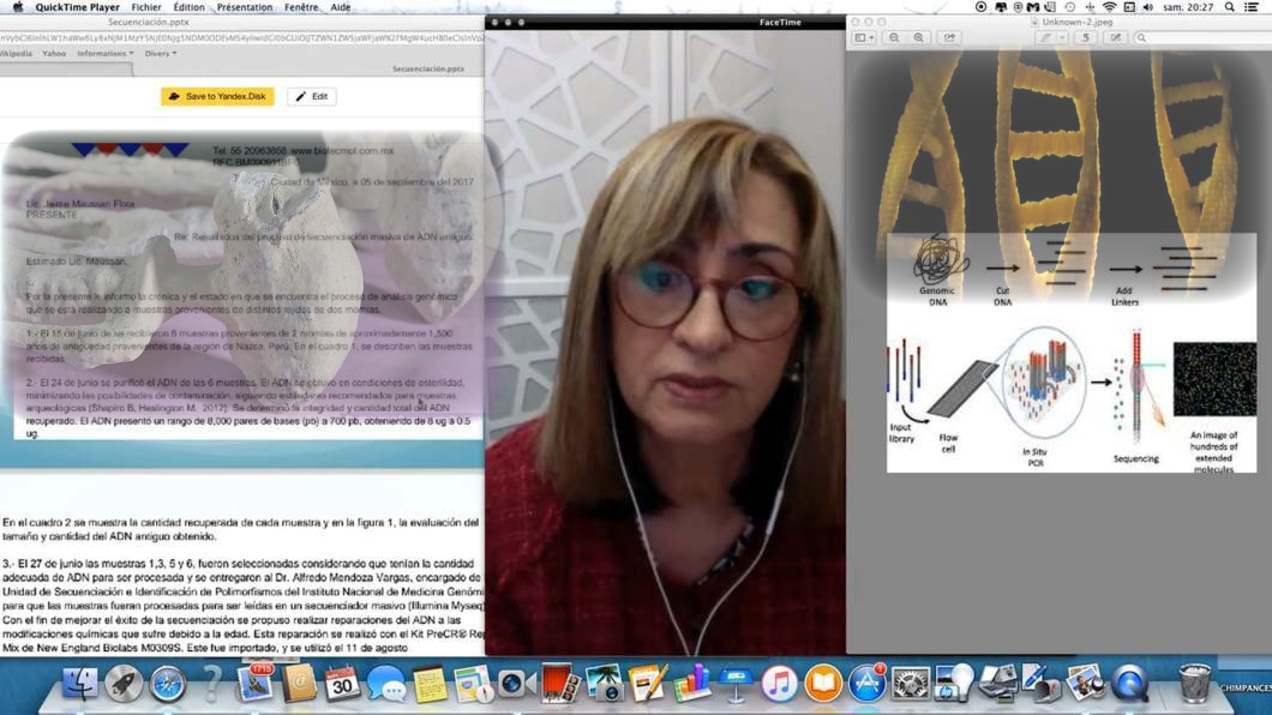
Dr. Clara Martinez
Background Information: NCBI is the database of genetic sequences an annotated collection of all DNA sequences available to the public (Nucleic Acids Research, 2013 Jan; 41 (D1): D36-42). GenBank is part of the International Nucleotide Sequence Database Collaboration, which includes DNA DataBank of Japan (DDBJ), the European Nucleotide Archive (ENA) and GenBank in NCBI.
These three organizations exchange data daily. A GenBank launch occurs every two months and is available on the ftp site. The release notes of the current version of GenBank provide detailed information on the version and notifications of upcoming changes in GenBank. The release notes of previous versions of GenBank are also available. GenBank growth statistics for the traditional GenBank divisions and the WGS division are available in each version.
Discussion - El Patio Hostel, November 18, 2018
One unusual finding is that Wawita is not the same age as Maria. She is about 700 years old while Maria is 1700 years old. Clara speculates that Maria could not have given birth to Wawita. So why were they found in the same location? Dr. Salas speculates they could have been placed there for some ‘ritualistic’ purpose.
The discussion then turns to the question of the sex of Maria. She had mammary glands and her pelvis showed that she was able to carry and give birth to a child. No evidence of testicles was found. Clara points out, however, that there were definite DNA markers for the Y-Chromosome that is indicative of the male in humans.
Presentation - Hall of Congress, Lima, Peru
There are three companies that did exploratory analyses on samples from the mummies. They are: Biotecmol, Mexico; Lakehead University - Paleo DNA, Canada; and the University of St. Petersburg, Russia. Ms. Martinez shows the listing of bacteria found on the samples. These are typical for the location where they were found. They also checked to see if the DNA sequences corresponded to common animals such as Alpaca, dogs, cats, baboon, horse, chimpanzee, etc. They did find some dog DNA but that could be explained by the dog the Huaquero (grave robber) had with him during his exploration. The findings for the nuclear DNA sequences for a bone from Victoria: 2,470,000 base pairs were analyzed. 19.2 % of the DNA was human. From the Maria bone specimen DNA: 33.6% human The small (tridactyl) mummies contain about 19.8 % human DNA.
In general there is effectively no genetic similarity with humans from any of these specimens. With respect to the detached skull and a detached hand: 100 % of the mitochondrial DNA corresponds to homo sapiens. If we start with the working hypothesis that these were human, then you could ask the questions: From where did they originate? What was their migration pattern? For that, we studied the Y chromosome markers.
From the study of the detached skull sample, it was determined that they had their origin in the regions of the Americas. However, and this is important, we do not have the ancient Y chromosome base markers with which to make a valid comparison. Then we looked at the mitochondrial DNA (16,569 base pairs) They identified some Haploid groups from the skull and the hand. We are not sure about the origins of these specimens.
Conclusions: There are two possible different species? At the morphological level and from radiological and tomographic analyzes, large phenotypic differences are observed between two types of the desaturated tridactyl bodies. The average taken from the three laboratories that analyzed sequences from Maria show 33.6% correspondence to Homo Sapiens. We have one laboratory concluding that Victoria has 19.8 % correspondence and one laboratory concluding that Wawita has a 25.1 % correspondence.
The loose head of which the Incan Institute took tissue for mitochondrial DNA studies is not reliable to be representative of the 60 cm tridactyl dried bodies object of this study since it has not had a scientific study for a previous verification of its real biological correspondence with a complete tridactyl dried body. No comparative DNA studies have been performed to be able to use it as a representative of this group of bodies. This way of proceeding can lead to contradictory results and at the same time confuse the uninitiated with the subject.
The results of mitochondrial DNA of this loose head and the big hand are only valid for these samples and are not comparable with the other results of the dried tridactyl bodies because they do not present a scientific study that allows associating these loose pieces with complete bodies studied. From the scientific rigor it is not possible to trace the mitochondrial DNA results obtained by the Incan Institute to explain with them the DNA of the 60 cm dried tridactyl bodies that have been the object of study by the Gaia and Tercer Milenio teams.
The mitochondrial DNA analysis of this loose head yields 100% of compatibility with homo sapiens. This result cannot be used to call into question the results of the massive sequencing of Bio Tecmol and the Federal University of St. Petersburg, made with the staked tissue of Victoria's vertebrae by Dr. Edson Salazar. It is not known if the loose head is associated with the headless body of Victoria.
These sequences are about to finish. A significant percentage of human genes present a high degree of evolutionary conservation. The similarity between the human genome and the chimpanzee is 98.77%. The percentages of correspondence found in the massive sequences of nuclear DNA for Maria (30.8%), Wawita (23.8%) and Victoria (19.82%) are far from presenting a similar percentage to primates or other known species in the BLAST database. Therefore the work of phylogenetics must continue with these bodies.
These results are very far from the percentage of DNA shared by species such as the dog, the cat, the llama with homo sapiens. This denies as sources of alleged manipulation to these species of the environment and that were analyzed. For the unassigned readings of the alignment step, they were subjected to classification analysis using Kraken. This assigns taxonomic labels to the sequencing readings based on the exact alignment of k-mers against groups of genomes (bacterial, plasmids, viruses, etc.) First, a reference database was constructed from bacteria, archaic and viral genomes. In RefSeq.
This database was considerably large and averaged about 8 gigabytes in size. To eliminate the main source of false positive results, such as low complexity sequences in the genomes themselves: the 'remains' program was run on all genomes and then the database was built from these 'leftovers' genomes. Ages of specimens from carbon dating: Brain matter: 1032 ± 30; Maria (skin): 1771 ± 30; Victoria (skin): 791 ±30 Based on the results of mitochondrial DNA repeated twice with the same samples in LAKEHEAD University - PALEO DNA.
The Inkari Institute could be contributing indices to explore the hypothesis that exists in the Batch of dried bodies two categories of pieces, both with archaeological interest: 1. Old loose pieces such as the big hand and loose head (from which brain tissue was extracted for perform the MIT DNA analyzes, worked by ancient people from the bone remains of homo sapiens, their dates through old C14 (technique) are verified with three laboratories. 2. Desiccated tridactyl bodies without human manipulation, from results of nuclear DNA sequencing such as the bodies of Maria and Victoria.
Before finalizing it would also be possible to cite the LAKEHEAD University PALEO DNA laboratory, which in its report states: 1. The comparison samples that were sent may contain a profile of the archaeologists or any other individual that may have handled the sample and potentially contaminate it. 2. Therefore we cannot guarantee that these profiles are authentic and not from a previous origin.
Conclusions: The Mitochondrial DNA from the free skull and the large hand, correspond 100% to homo sapiens. The nuclear DNA analyses of the other mummies show a non-correspondence to homo sapiens of these specimens. Further analyses are needed.
Note: In most species, including humans, mitochondrial DNA is inherited solely from the mother.


